Chronic pain
When pain becomes the loop you can't get out of.
Chronic pain rarely has a single cause and rarely has a single fix. It needs a coordinated plan, a team that listens, and someone tracking whether you're actually getting better.

The kinds of pain we help with.
- Chronic low back pain
- Chronic neck pain
- Joint pain (knee, shoulder, hip)
- Persistent post-injury pain
- Pain that's been worked up but hasn't resolved
- Recurring migraines and tension headaches (see also: Migraines & Headaches)
A different approach.
Start where you are.
Many chronic pain journeys involve multiple providers, conflicting recommendations, and little progress despite ongoing treatment.
Your story matters.
We review your history, imaging, treatments, medications, and past results to keep your care team informed.
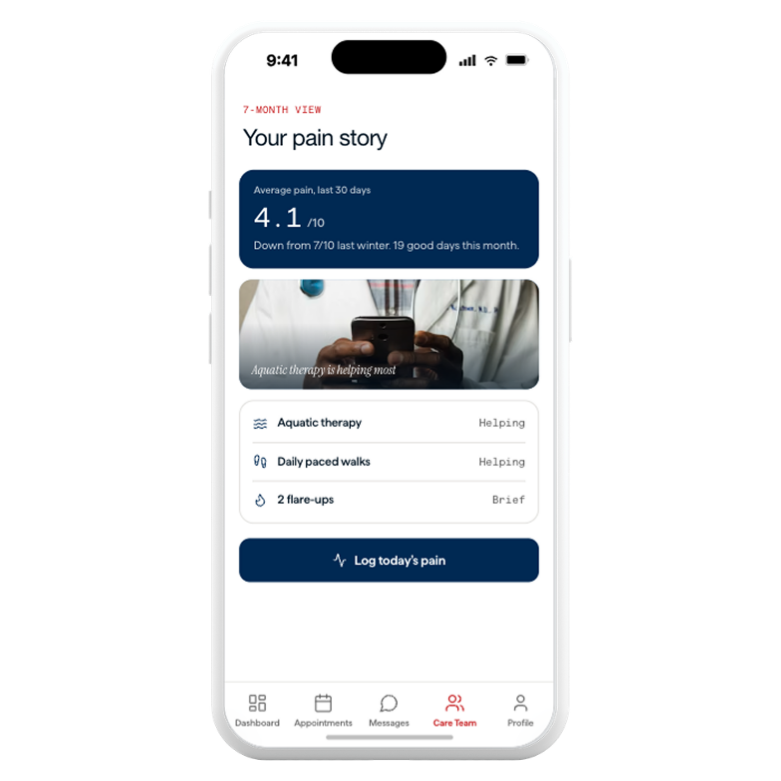
Progress you can measure.
We track progress weekly, focusing on function as much as pain. When something isn't working, we adjust the plan and explain why.
Numbers from published programs.
The evidence base for starting chronic pain treatment with coordinated, therapy-first care is large. A few of the numbers:
Pain reduction in a peer-reviewed evaluation of a digital therapy-first program for back, neck, and joint pain.
Hinge Health, JMIR 2022.
Reduction in surgical intent among patients in structured conservative-first chronic pain programs.
Hinge Health, JMIR 2022.
Reduction in opioid use among patients in a coordinated therapy-first chronic pain program.
Sword Health, peer-reviewed published outcomes.
Geographic variation in spine surgery rates with no corresponding difference in patient outcomes.
Dartmouth Atlas of Health Care.
Where medication fits in the plan.
Medication, when it fits.
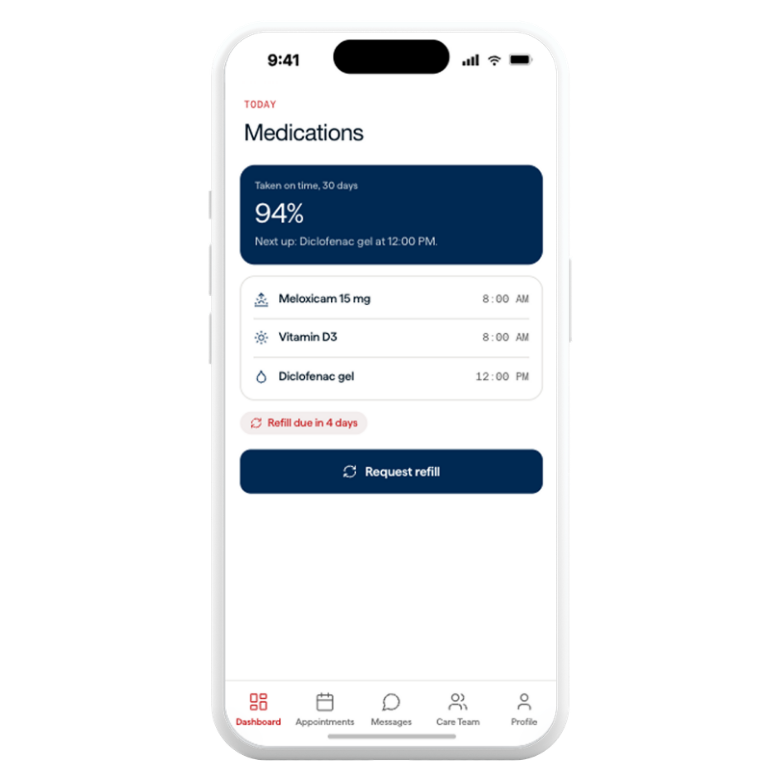
Medication may be part of the plan, or it may not. Those decisions are made by a physician on your team based on your condition and goals.
Coordinated, not replacing.
We bring structure to your care, surface side effects early, and support informed conversations about what's working and what isn't.
Records that support better conversations.
The AMA recognizes deprescribing as an important part of chronic disease care. Better records help support those conversations over time.
Source: American Medical Association, Deprescribing Position Statement
Therapy-first, escalation when warranted.
We don't lead with injections, opioids, or surgery. Those are tools that exist for cases where they're appropriate, but they're rarely the first answer.
A physician on our team designs the care plan and determines the right therapy approach. Treatment is delivered by experienced therapists following that physician-led plan. We escalate only when escalation is warranted, and always with a doctor making the call.
Newsletter
Stories, research, and practical guidance.
What we're learning about chronic pain, recovery, coordinated care, and the future of healthcare, sent occasionally.
Living with pain that hasn't resolved?
Tell us a bit about what's been going on and we'll reach out within one business day.